Overview of the United Methodist Church Book of Discipline
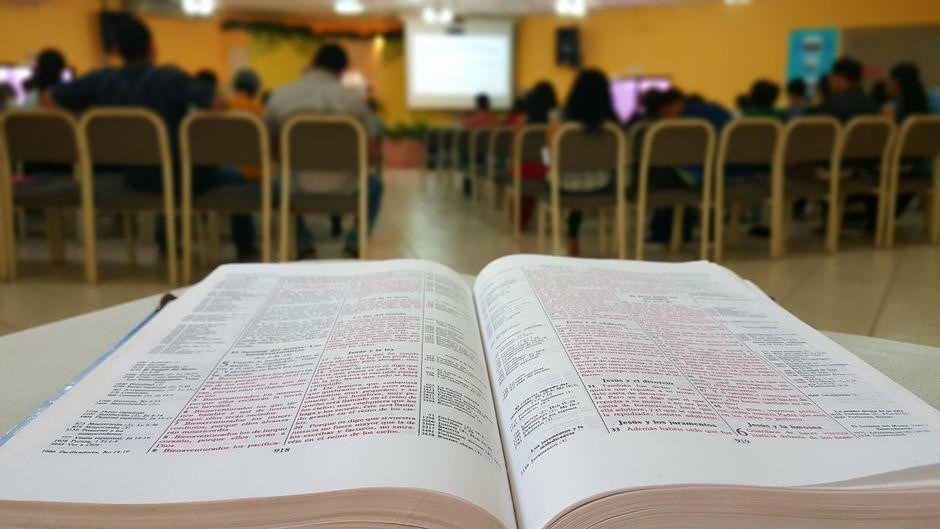
The UMC Book of Discipline is the church’s living rulebook, updated every four years by the General Conference. It outlines doctrine, governance, and practice, and is freely available as a PDF through official channels and digital libraries. Church leaders and members rely on it for guidance. Reviewed yrly!
Definition and Purpose
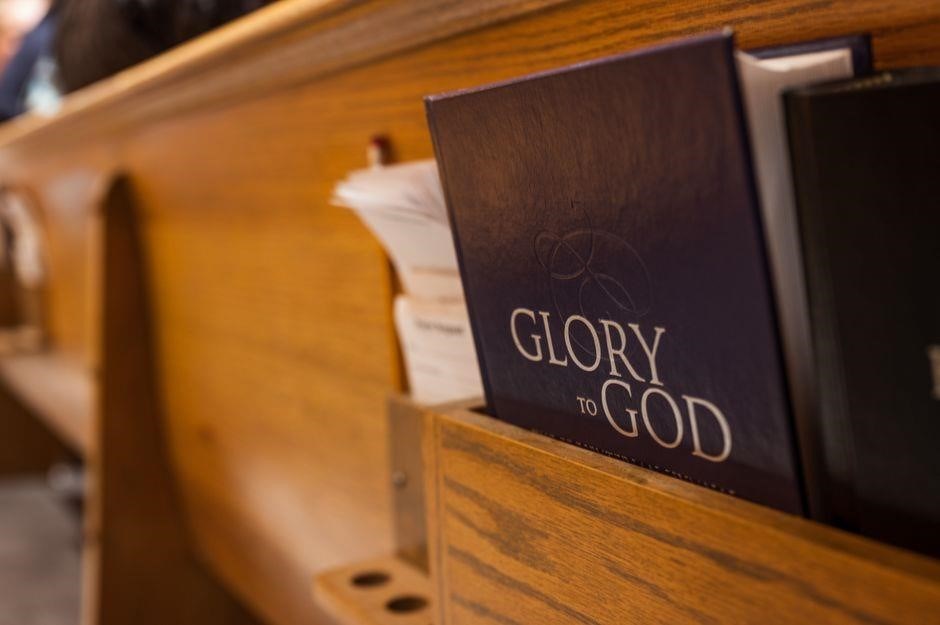
The United Methodist Church Book of Discipline is the official, living document that articulates the church’s theological convictions, ecclesiastical polity, and practical directives. It serves as the primary reference for clergy, lay leaders, and congregants, guiding worship, ministry, and administrative decisions. The book is organized into sections that cover doctrine, worship, mission, governance, and discipline, each providing clear, actionable guidance. By offering a unified framework, the Discipline helps maintain doctrinal integrity while allowing local churches the flexibility to respond to cultural and contextual needs. It also codifies the church’s stance on social issues, ethical conduct, and community engagement, ensuring that all members operate under a shared set of principles. The PDF version, freely distributed by the United Methodist Publishing House and accessible through the church’s official website and digital libraries, makes the Discipline readily available for study, reference, and implementation. This digital accessibility supports ongoing education, fosters transparency, and encourages participation in the life of the church. In essence, the Book of Discipline is both a doctrinal compass and a practical manual, designed to sustain the unity, mission, and governance of the United Methodist Church worldwide. The document also outlines the roles of bishops, conference delegates, and the General Conference, detailing how decisions are made and how accountability is maintained. It provides guidelines for ordination, pastoral care, and the administration of sacraments, ensuring consistency across the global denomination. Additionally, the Discipline addresses the church’s approach to social justice, environmental stewardship, and interfaith dialogue, reflecting its commitment to prophetic witness in contemporary society. By integrating theological depth with operational clarity, the Book of Discipline empowers local churches to act in unity while respecting regional diversity. Its PDF format, updated every four years, allows members to stay informed of new amendments and to apply them promptly in their ministries. The accessibility of the PDF also facilitates academic research, theological education, and public outreach, reinforcing the church’s mission to be a visible, organized, and compassionate presence in the world. Thus, the Book of Discipline remains an essential, evolving resource that shapes every aspect of United Methodist life, from doctrinal teaching to everyday practice, ensuring that the church remains faithful to its founding principles while engaging the modern world.

Historical Development
The United Methodist Church’s Book of Discipline has evolved through successive General Conferences, reflecting theological insight and practical necessity. The first formal compilation appeared in 1948, consolidating earlier denominational manuals and the 1939 Book of Discipline of the Methodist Episcopal Church. Subsequent revisions were driven by the church’s expanding global reach and changing societal contexts. In 2004, a comprehensive edition was released, incorporating significant updates on governance, mission, and social issues, and made available in PDF format through the United Methodist Publishing House. This edition emphasized the church’s commitment to justice, stewardship, and inclusive worship practices. The 2020 edition, published in anticipation of the 2024 General Conference, introduced further refinements, particularly in areas of digital ministry, climate stewardship, and the role of lay leadership. The 2024 edition, finalized during the General Conference held in September 2024, reflects the latest theological emphases and administrative reforms, including updated procedures for episcopal oversight and the integration of technology in congregational life. Each four‑year cycle involves a rigorous review process, with delegates from all conferences submitting proposals, which are debated, amended, and voted upon. The PDF versions, freely distributed online, ensure that every member, regardless of geographic location, can access the current discipline. This digital accessibility has been pivotal in fostering transparency, enabling real‑time study, and supporting the church’s mission in a rapidly changing world. The historical trajectory of the Book of Discipline demonstrates a continuous balancing act between tradition and innovation, underscoring the United Methodist Church’s adaptive nature while maintaining doctrinal continuity. Its evolution reflects a balance of tradition and innovation for the future. It balances heritage and progress, guiding the church toward inclusive ministry.

Publication and Accessibility
The UMC Book of Discipline is published annually by the United Methodist Publishing House and distributed in PDF form through the official website, digital libraries, and the Issuu platform. Members can download, view, and print the current edition for free, ensuring worldwide accessibility and transparency.
Official Publication Channels
The United Methodist Church (UMC) ensures that its Book of Discipline is widely available through several official publication channels. The primary source is the UMC’s own publishing arm, the United Methodist Publishing House (UMPH), which releases the current edition in both print and digital formats each General Conference cycle. The print version is distributed to churches, conferences, and the general public via the UMPH’s retail outlets and the Cokesbury network, while the digital edition is made freely downloadable as a PDF from the UMC’s official website (www.umc.org) and the UMPH’s online portal. In addition, the UMPH partners with major digital libraries such as the Internet Archive and the National Library of Medicine to host the PDF, ensuring long‑term preservation and easy access for researchers and clergy worldwide. The UMC also collaborates with the Issuu platform, where the PDF is available for online reading and offline download, allowing users to view the document on any device. For members who prefer physical copies, the UMPH offers a subscription service that ships updated editions directly to churches and individual members. The UMPH’s distribution network is supported by a robust logistics system that coordinates with regional conference offices to manage inventory, shipping, and return of outdated copies. All official channels maintain strict quality control, ensuring that the PDF and print versions are identical in content and formatting. The UMPH also provides a dedicated customer support line and an online FAQ section to assist users with technical issues related to downloading or printing the PDF. By offering multiple, redundant publication routes, the UMC guarantees that every member, pastor, and layperson has reliable access to the authoritative text that governs the church’s life and mission. All editions update every four year.
PDF Versions and Digital Access
The United Methodist Church (UMC) publishes the Book of Discipline as a PDF that is freely downloadable from several official channels. The primary source is the UMC website (www.umc.org) where the PDF is hosted under the “Resources” section. Users can click the “Book of Discipline” link to view or download the file. The UMPH also hosts the PDF on its site (www.umph.com) and on the Cokesbury online store, where it can be downloaded for free or purchased as a printed copy. The Internet Archive (archive.org) provides a digitized copy of the 2024 edition that can be viewed online or downloaded as a PDF. The PDF is searchable, with tagged text that allows keyword searches across the entire document. The UMC also offers a mobile‑friendly version that can be opened on tablets and smartphones. For those who prefer a printed copy, the PDF can be printed directly from the browser or downloaded and printed at a local shop. The UMC’s digital platform includes a “Download” button that selects the appropriate file size for the user’s device. Each General Conference cycle the UMC updates the PDF, ensuring the latest edition is always available. The PDF is integrated into the UMC’s mobile app, providing quick access for clergy and lay leaders on the go. The UMC’s digital strategy emphasizes accessibility, offering the PDF in multiple languages and optimizing file size for low‑bandwidth environments. All PDF versions are protected by a digital signature that verifies authenticity and prevents tampering. The UMC’s digital access policy allows free, unlimited downloads for members. All rights.!
Revision Cycle and General Conference Role
The General Conference meets every four years to review, amend, and adopt the Book of Discipline. Delegates discuss doctrine, governance, and policy, ensuring the book reflects church needs. Incorporates feedback clergy, laity, partners, sustaining UMC unity.
Four-Year Revision Process
The United Methodist Church’s Book of Discipline undergoes a structured, quadrennial revision cycle orchestrated by the General Conference. The process begins with a comprehensive review of the current edition, during which clergy, laity, and denominational partners submit proposals for doctrinal clarifications, governance updates, and policy adjustments. These proposals are organized into thematic committees—such as Doctrine, Governance, and Social Ministries—each tasked with drafting amendments, consulting theological scholars, and ensuring alignment with the church’s historic confessions. Drafts circulate through a multi‑stage feedback loop: first to the General Conference’s standing committees, then to the broader assembly of delegates representing every U.S. conference and international region. Delegates debate each amendment, vote, and may request further revisions. Successful amendments are incorporated into the revised manuscript, which is then subjected to a final review by the Conference’s executive committee. Upon approval, the updated Book of Discipline is printed and distributed in PDF format through the official UMC publishing house, making it freely accessible to all members worldwide. This rigorous cycle ensures that the book remains responsive to contemporary theological, social, and administrative developments while preserving the church’s doctrinal integrity. Members and clergy worldwide rely on this living document to guide worship, governance, and social action. daily.!
Key Amendments in Recent Editions
Over the past decade, the United Methodist Book of Discipline has incorporated several pivotal amendments that reflect evolving theological, social, and administrative priorities. In the 2016 edition, the church formally adopted the “Christ Centered” language, emphasizing the primacy of Christ in all doctrinal statements and re‑affirming the historic confessions. The 2020 revision expanded the section on “Social Ministries,” adding a comprehensive framework for addressing climate change, racial justice, and economic inequality, and introduced a new “Global Mission” chapter that outlines collaborative strategies with partner denominations worldwide. A significant addition in the 2024 edition is the “Digital Ministry” appendix, which provides guidelines for virtual worship, online sacramental administration and digital evangelism, reflecting the church’s response to the COVID‑19 pandemic and the growing importance of technology in ministry. The 2024 text also revises the “Governance” chapter to streamline the process for electing bishops, incorporating a new “Regional Oversight” mechanism that enhances accountability and transparency. Additionally, the 2024 edition updates the “Pastoral Care” section to include mental health resources and a more robust framework for clergy support, acknowledging the increasing demands on pastoral staff. These amendments collectively demonstrate the church’s commitment to theological fidelity while engaging contemporary societal challenges and leveraging modern communication tools. These updates reinforce UMC’s mission

Legal and Copyright Considerations
Copyright for the 2024 UMC Book of Discipline remains under the United Methodist Publishing House. The text is copyrighted, but the church permits use for educational purposes with attribution. PDF versions are downloadable from official sites, yet distribution beyond these channels requires permission for all.!!!
The 2024 edition of the United Methodist Church Book of Discipline remains under the copyright of the United Methodist Publishing House. The text is not in the public domain and is protected by U.S. copyright law. While the church encourages the use of the PDF for personal study, teaching, and ministry preparation, any reproduction beyond personal use requires explicit permission. The official UMC website provides a downloadable PDF that is licensed for non‑commercial, educational purposes with proper attribution. For commercial use, editorial excerpts, or redistribution, church representatives must obtain a separate license. The copyright notice appears on each page, and the publisher reserves all rights to modify, translate, or distribute the work. The 2024 edition also includes a digital watermark indicating its status as a copyrighted document. Users are advised to consult the UMC’s copyright policy or contact the publishing office for clarification before sharing or publishing excerpts. This policy ensures that the doctrinal integrity and the church’s governance documents are protected while still allowing widespread access for faithful use within the community.
The UMC’s copyright policy, found on its official site, permits copying for study, teaching, and internal use. Excerpts over 10% of the work or commercial use require a license. Users must cite the source and seek permission for translations or large reproductions. Following these rules protects doctrinal integrity while aiding education. This guidance ensures use across ministries worldwide.

Licensing for Educational Use
The United Methodist Church Book of Discipline is a copyrighted text, yet the UMC encourages its use in educational contexts. Non‑commercial, internal use—such as classroom instruction, seminary coursework, and local church study groups—is permitted without a separate license, provided the material is not reproduced in a way that exceeds 10% of the total text. For larger excerpts, or if the material is to be distributed beyond the immediate educational setting, the publisher requires a written license. The UMC’s policy requires that all excerpts be properly cited with the title, edition, and publisher, and that the source be acknowledged in any accompanying materials. Digital copies may be shared within a closed learning environment, but public posting on websites or social media requires explicit permission. The copyright holder also reserves the right to approve translations or adaptations for use in other languages. Institutions should consult the UMC’s copyright guidelines or contact the United Methodist Publishing House for clarification before using the text in curricula, printed handouts, or online courses. By following these guidelines, educators can safely incorporate the Book of Discipline into their teaching while respecting the church’s intellectual property rights. The UMC’s official website provides a downloadable PDF that can be used for study, but any redistribution or commercial use must be authorized. The 2024 edition’s copyright notice appears on each page, and the publisher reserves all rights to modify, translate, or distribute the work. This policy balances accessibility for faithful use with protection of doctrinal integrity.
Educators may request a free license for larger excerpts!
Practical Applications for Church Members and Clergy
The UMC Book of Discipline PDF guides worship planning, council decisions, and clergy training. Members use it to understand doctrine, governance, and service roles; pastors reference it for sermon prep, conflict resolution, and mission strategy. It remains a core resource for study teaching in all thanks!!
Using the Book for Governance
The UMC Book of Discipline PDF is the guide for church governance, detailing structure, roles, and responsibilities of clergy, lay leaders, and governing. It outlines procedures for electing bishops, forming and operating annual conferences, and establishing local church councils. The document specifies the legal authority of the General Conference, the process for amending the book, and the rights and duties of congregations in matters of doctrine, worship, and mission. By providing clear rules, the PDF enables decision‑making across the denomination, ensuring local churches remain aligned with the UMC’s theological convictions and administrative standards. Clergy and lay leaders use the text to prepare meeting agendas, draft bylaws, and resolve disputes, while members consult it to understand their rights, participate in elections, and engage in processes. The book’s accessibility in PDF format facilitates reference during council sessions, pastoral counseling, and programs, reinforcing stewardship throughout the church’s governance framework.
Appendices with sample forms, templates for minutes, and guidelines for stewardship help churches maintain fiscal responsibility, comply with state regulations, and report to the denomination. The book’s emphasis on collaborative leadership encourages local congregations to work with conferences, fostering unity and support across diverse cultural contexts. By adhering to the Book of Discipline, churches demonstrate accountability to the broader UMC community, uphold doctrinal integrity, and promote orderly growth.
In sum, the UMC Book of Discipline PDF is an indispensable tool for governance, ensuring that every level of the church operates in harmony with its mission and values. Its comprehensive, updated nature guarantees that church leaders remain informed about evolving theological insights, legal requirements, and best practices.
Reference in Pastoral Practice
Pastors rely on the UMC Book of Discipline PDF as a theological compass and practical handbook. The text offers doctrinal statements that shape preaching, outlines sacramental guidelines for baptism and communion, and provides pastoral care protocols for counseling, marriage, and divorce. By consulting the book, clergy align sermons with official doctrine, ensuring consistency across the denomination. The PDF also contains policies on church discipline, offering a framework for addressing conflict, restoring relationships, and maintaining congregational health. Pastoral teams use the book’s sections on worship to design liturgies that meet liturgical standards while honoring local traditions. It supplies templates for pastoral letters, pastoral care checklists, and guidelines for handling bereavement, illness, and crisis. The book’s emphasis on stewardship informs financial stewardship training, encouraging pastors to teach congregants about responsible stewardship of gifts and resources. In mission work, the PDF directs pastors in forming mission teams, establishing outreach ministries, and coordinating with conference ministries. The document’s legal provisions guide pastors in navigating civil law, ensuring that church actions comply with state regulations and denominational policies. By integrating the Book of Discipline into daily ministry, pastors foster theological integrity, ethical conduct, and a unified vision for the church’s mission. Pastoral leaders also consult the Book of Discipline for guidance on ethical decision‑making, ensuring that every action reflects the church’s commitment to justice, compassion, and fidelity to Scripture. Referencing these standards, clergy can address ethical dilemmas, such as bioethics, social justice, and ministry, with doctrinal clarity!